

Webchat SDK allows you to embed your Amity chatbot into your website. This provides a customized chat experience for visitors right on your site.
Create Webchat SDK channel
Section titled “Create Webchat SDK channel”Go to Channels menu in your Amity Bots Platform page and add a new Webchat channel with the channel name. Once added, click on the newly-created channel, the following popup should appear:
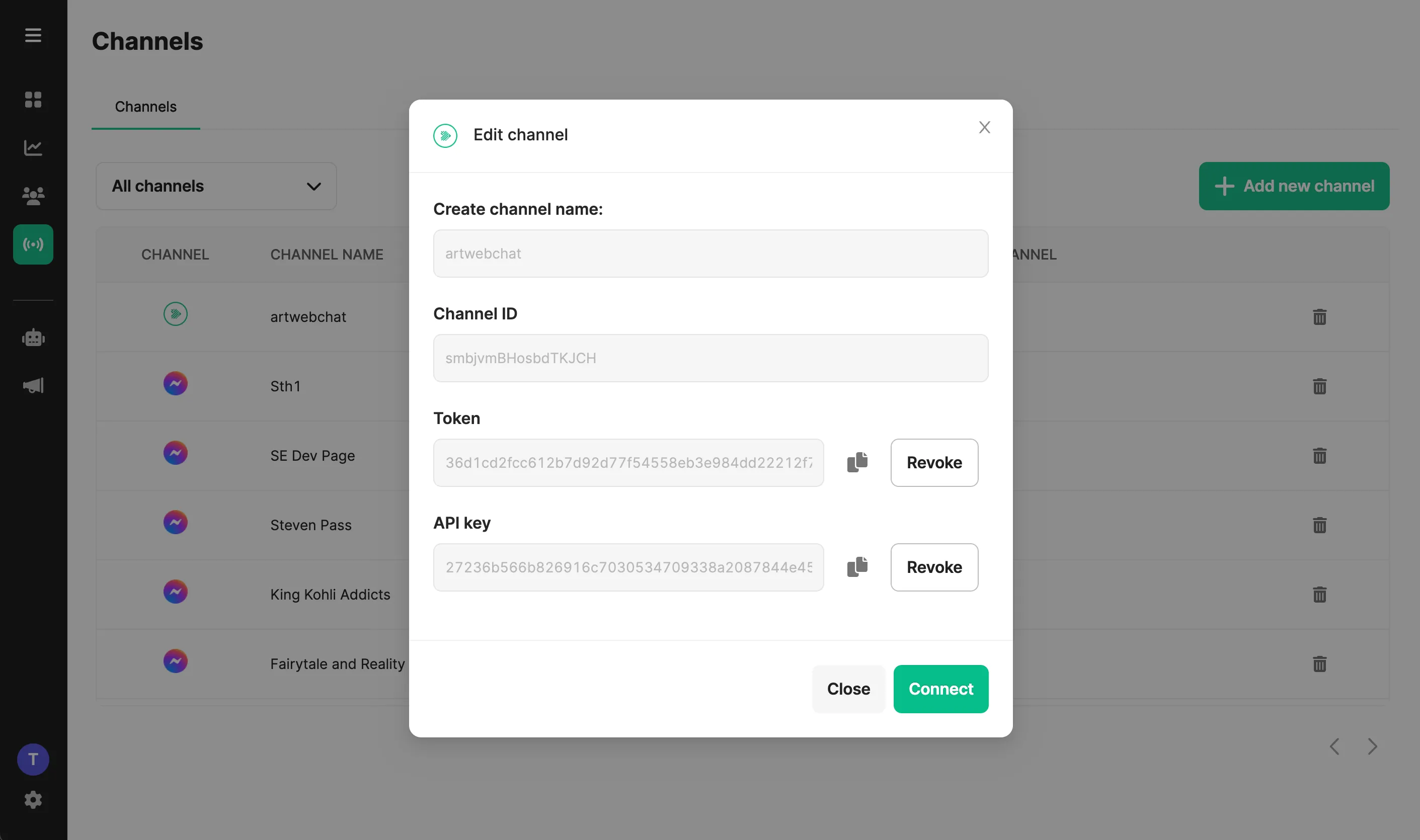
Record your channel ID to be used in the next step
Implement Webchat SDK
Section titled “Implement Webchat SDK”- Include the SDK file in your page:
<script src="http://webchat-sdk.amitysolutions.com/sdk/ams_sdk.js"></script>- Initialize the chat with required parameters:
ams_sdk.chat.load({
  // Channel ID generated from step above  channelId: "YOUR_CHANNEL_ID",
  // Display mode - "full_screen" or "bubble"  mode: "full_screen",
  // Optional display name for user  displayName: "John Doe",
  // Optional rich menu configuration, see detail below  richmenuSetting: {  },
  // Bubble setting when used in "bubble" mode  bubble: {  }});
This will load the chat in a full screen overlay when .load is triggered.
Webchat Mode
Section titled “Webchat Mode”
When initializing Webchat SDK you can specifiy 2 modes: fullscreen or bubble
Fullscreen Mode
Section titled “Fullscreen Mode”Full screen mode displays the webchat interface in a full page overlay. This can be useful if you want to navigate your user directly to the fullscreen webchat from other page or use Webchat SDK in a Webview inside a native mobile application.
Bubble Mode
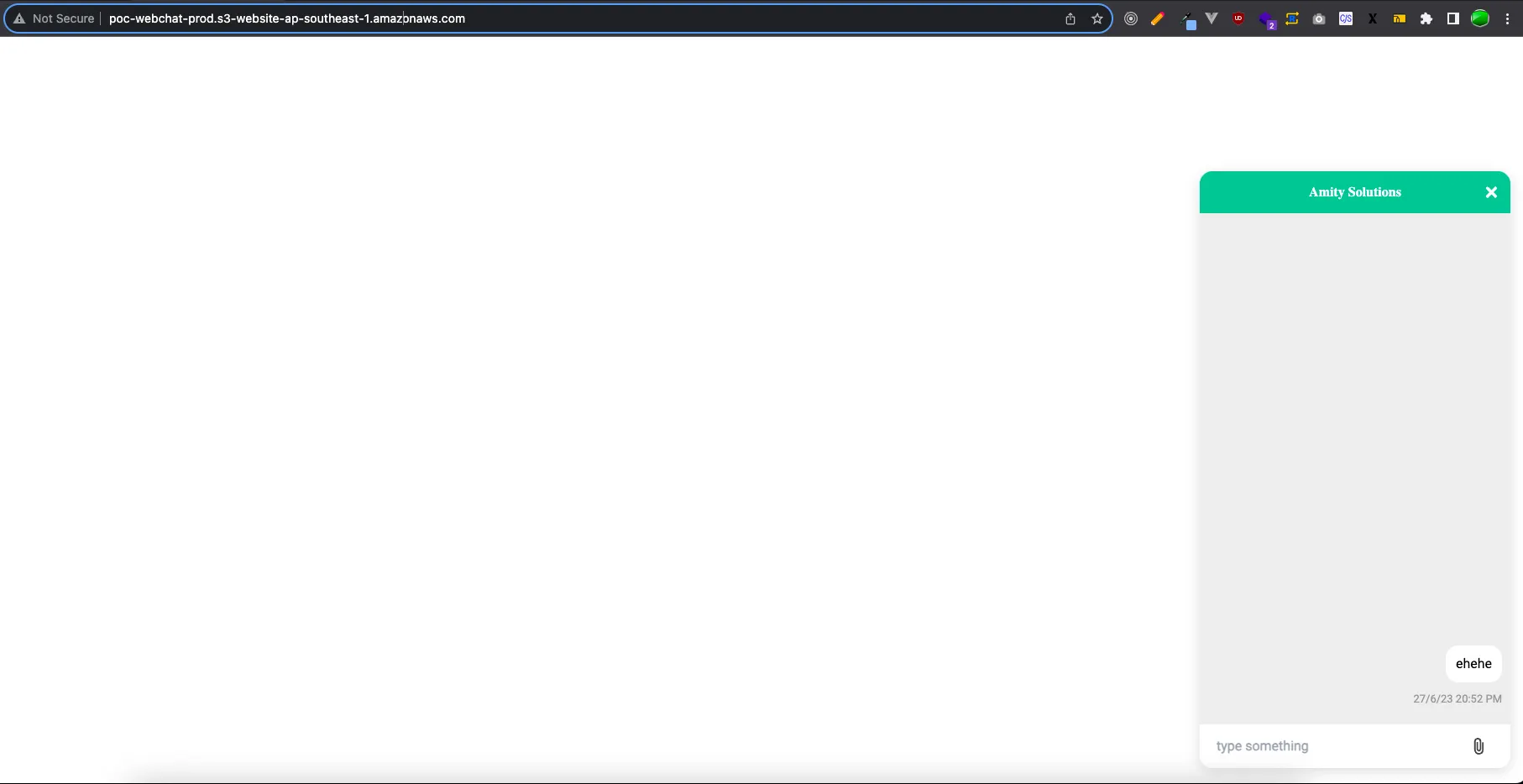
Section titled “Bubble Mode”Bubble mode displays a small circular chat button that opens a widget.
Rich Menu Sizing:
Section titled “Rich Menu Sizing:”The richmenuSetting controls the height of the rich menu area. There are 3 options:
- Default - Automatically sizes based on the window width. This divides the full window width by 1.6667. For example, on a 300px wide window it will be 1000 / 1.6667 = 180px high.
- fixedHeight - Sets an absolute fixed height in pixels. For example:
richmenuSettings: { fixedHeight: 300 // Rich menu with 300px in height.}- dividedBy - Makes the height responsive. It takes the default width divided by 1.6667 and divides it again by this number.
richmenuSettings: { dividedBy: 2}On our 300px width container, the default is 180px high. With dividedBy: 2, height of richmenu is 300 / 1.6667 / = 150px
dividedBy makes the rich menu responsively scale down on smaller screens.
Was this page helpful?
Thank you for your feedback!